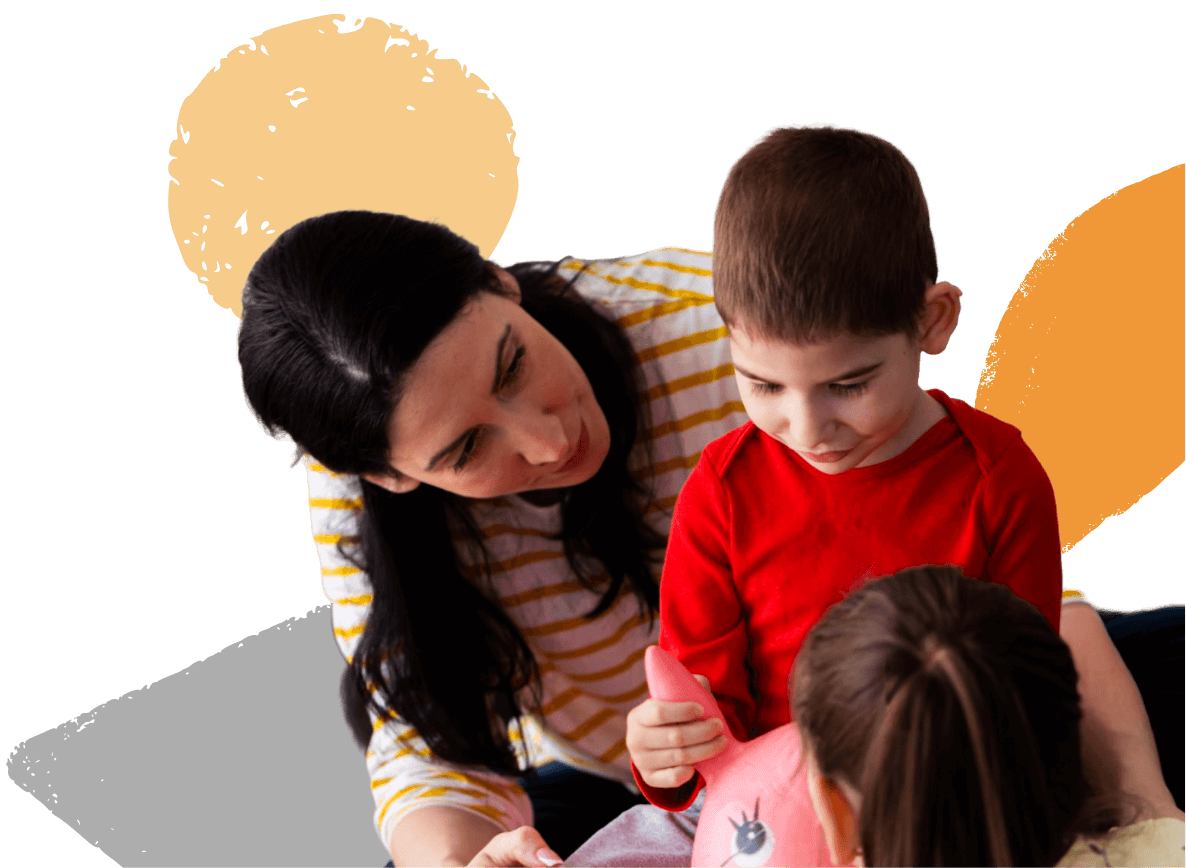
Specialist daycare programs that once provided safe, structured care for children with substantial intellectual impairment are closing. Mainstream childcare and schools can’t meet their complex needs. The result? Families are being abandoned by a system that claims to include them.
Every child deserves care. But right now, thousands of children are being left behind.
Australian families are currently facing an impossible choice. Enrol their child with substantial intellectual disabilities and/or developmental delays in mainstream childcare that can’t support them, or care for them at home – where they are isolated, unable to participate, and left with no options at all.
Specialist early childhood programs that parents rely on, designed specifically for children with complex needs, are being defunded and forced to close. Government policy now treats these programs as “non-compliant” because they’re not “inclusive” enough. But for children with substantial disabilities, mainstream settings aren’t just unsuitable, they’re unsafe.
Children with substantial developmental delays are being
placed in mainstream settings that can’t meet their needs.
Tap the image to learn more
Parents of children with substantial intellectual impairment share many of the same stories.
Calls to pick up children who’ve been bullied to tears, or abandoning mainstream daycare entirely due to anxiety, exclusion and rejection.
That’s unacceptable. We need urgent action to fund these vital support systems and uphold families’ way of life.
Without dedicated funding, the Australian government is betraying its most vulnerable members of society.
The NDIS does not fund specialised care for preschool and primary school-aged children, leaving no safe option for children under 9 with significant global developmental delays.
That’s not something Australia should accept.
True inclusion for children with substantial intellectual impairment doesn’t mean forcing them into mainstream settings that isolate and overwhelm them.
This is the opposite of inclusion – it’s abandonment.
The alternative is within our reach: dedicated, compassionate, evidence-based specialised programs with trained staff and better ratios.
Research shows that wider society saves $6 for every $1 invested in specialised childcare programs. Even better, supported children with substantial intellectual impairment gain up to 40% in development, language, and school readiness skills.
Let’s prevent lifelong harm, honour the UN’s Right to Specialised Care, and back greater access to tailored services for every child.


Families of children with substantial disabilities have some of the lowest workforce participation rates in Australia.

The entire family system breaks down when one child’s needs consume all resources and attention.

Without specialist intervention, children lose gains in communication, behavior, and social skills during crucial developmental years.

Excluded from community participation, families retreat from social connections and support networks.

For every $1 not invested in specialist early intervention, the economy loses $6.16 in developmental gains, family workforce participation, and reduced lifetime support costs.

Australia’s disability and early childhood policies have created a perfect storm for families of children with substantial intellectual disabilities and developmental delays.
Next
Current government frameworks define “inclusion” narrowly as mainstream participation only. The result: specialist programs are excluded from funding, deemed incompatible with inclusion principles. The NDIS Back on Track Amendment 2024 explicitly excludes funding for specialised early childhood care.
Next
Meanwhile, mainstream childcare centres that are already stretched thin, are told they must accept all children regardless of capacity to meet their needs. Providers can’t say no, but they also can’t provide adequate support.
Next
Parents are caught in the middle. They’re told to access mainstream childcare until age 9, when NDIS funding for 1:1 support finally becomes available. But what happens in those critical early years? Children are placed in unsuitable environments where they’re made to feel vulnerable, families collapse under pressure, and everyone suffers.
Next
Article 23 of the UN Convention on the Rights of the Child guarantees children with disabilities the right to access specialized, government-funded care and education.
Australia has signed this convention. Right now, we’re breaking it. It’s unacceptable.
Read AgainChildren with substantial disabilities deserve environments where they can learn, grow, and belong safely. Their families deserve choice, support, and the ability to participate in work and community life. Childcare educators deserve adequate training and resources.
None of this is happening under the current system.
Specialist care delivers proven developmental outcomes. It provides the structured, individualised support these children need. But specialised programs are closing, leaving families with nowhere to turn.
Australia can do better. Australia must do better.
True inclusion means meeting every child where they are. It means funding care pathways that work, whether mainstream or specialist. It means restoring family choice and control.
It means recognising that when a system excludes the children who need it most, it’s not inclusion at all.
Every child, with every need, deserves care in an environment that’s right for them.
Right now, children with substantial intellectual disabilities have nowhere to go.